
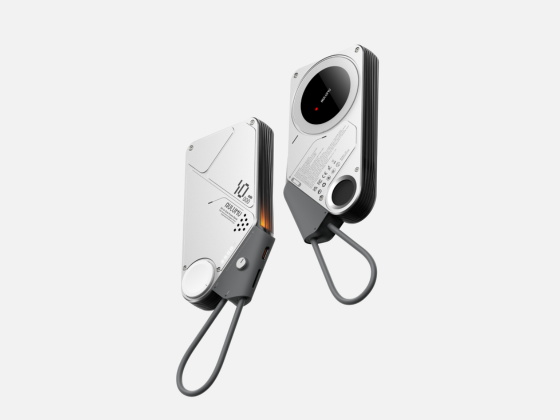
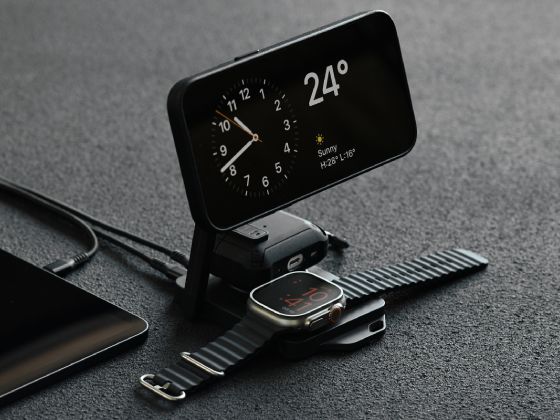
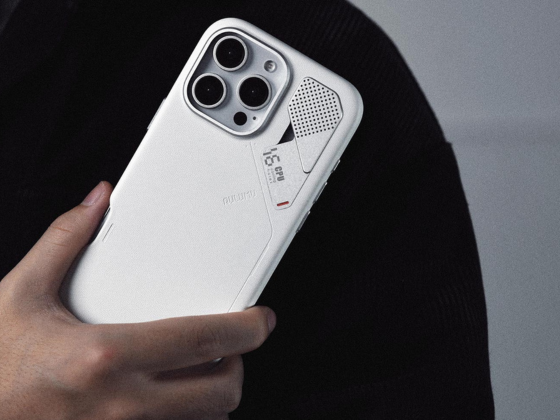

Are MagSafe and Qi mutually exclusive? For those who are unfamiliar with these two modes, this question may be difficult to answer. Today, Aulumu will analyze the essence, similarities, and differences of each to help you understand whether they are really mutually exclusive or compatible.
What is MagSafe ?
The MagSafe concept was first proposed by Apple in 2006 as a magnetic charging port designed for the original MacBook Pro . If the charging cable was accidentally pulled out, it would automatically detach from the charging port, preventing the cable and the laptop from falling. In 2020 , MagSafe was introduced on the iPhone 12 , evolving from a simple magnetic port into a complete wireless magnetic charging ecosystem. By combining magnetism and charging, MagSafe provides more stable charging and automatically finds the optimal position when placing your smartphone to maintain efficient charging.
What is Qi?
In 2008 , the Wireless Power Consortium was established to develop a unified standard for wireless charging. In 2010 , the Qi 1.0 standard was officially released, marking the beginning of the commercialization of Qi wireless charging. Since then, Qi has gradually been incorporated into various charging devices, such as wireless charging docks and in-car wireless charging systems. Simply put, Qi is a non-magnetic wireless charging method that uses electromagnetic induction to charge devices over short distances.
Similarities Between MagSafe and Qi
Since both are wireless charging, there are naturally similarities between MagSafe and Qi .
Basic principle : Both work on the basic principle of wireless charging via electromagnetic induction at close range.
Smart Charging : Both MagSafe and Qi detect the device's state before charging and adjust the charging power accordingly, making them more than just a simple, crude power system.
Protection mechanisms: Both devices feature four safety protection mechanisms: overheating protection, foreign object detection, dynamic power adjustment, and reduction or halt of charging power after the battery is fully charged.
- Overheat Protection: Our smartphones have built-in temperature sensors, and both MagSafe and Qi have internal temperature monitoring. Both monitor the temperature of the battery, coil accessories, and the entire device in real time. If the temperature gets too high, the output will be reduced and charging will be paused or stopped.
- Foreign Object Detection: MagSafe and Qi generate magnetic fields indiscriminately. When conductive metal objects enter this magnetic field, they can induce currents, and the biggest side effect of this induced current is heat generation. In such situations, foreign object detection is crucial. Without foreign object detection, wireless chargers will continuously emit energy, and this continuous heat generation poses an immeasurable safety hazard. Therefore, foreign object detection is not an option in wireless charging, but a must. It prevents metal foreign objects from being mistaken for a charging device and generating heat during wireless charging, ensuring a safe charging process.
- Dynamic Power Adjustment: MagSafe and Qi monitor the temperature and power level of the device being charged in real time during the charging process. Based on feedback from the device being charged, output power is dynamically adjusted. Power is increased when power levels are low and automatically decreased as the device approaches full charge. If the temperature is too high, the device automatically cools down or stops charging.
- Charging power decreases or stops when the battery is fully charged: The worst thing you can do to a phone battery is to continue charging it after it's fully charged. Continuing to charge it for a long time after it's fully charged puts a lot of strain on lithium batteries. That's why MagSafe and Qi gradually reduce power as the battery approaches full charge and stop charging completely when it's fully charged. This prevents lithium batteries from being damaged by staying fully charged for too long.
The Difference Between MagSafe and Qi
Differences in Magnetic Connection: The biggest difference between MagSafe and Qi is the built-in magnetic connection. MagSafe has a built-in magnetic connection that automatically aligns the wireless charger and the device being charged during charging, maintaining the optimal charging position no matter where you place it. Qi , on the other hand, does not have this magnetic connection. Therefore, Qi does not automatically align the charger during charging, and users must manually position the device. Because a magnetic connection does not allow for optimal alignment, charging efficiency varies depending on the placement position. If the charger is not positioned correctly, charging may be slow or interrupted.
Differences in charging stability: The actual charging efficiency of Qi is highly dependent on the placement of the charging pad. Even with the same charging pad, efficiency can vary, sometimes faster and sometimes slower, and there's noticeable heat buildup during charging. MagSafe , on the other hand , offers superior forced magnetic force, automatically aligning the coils for consistent, stable output. Its temperature regulation is also more controllable, monitoring overall temperature changes in real time and adjusting power accordingly to reduce energy waste.
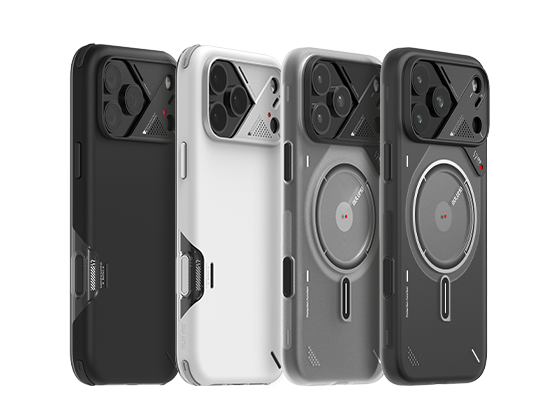
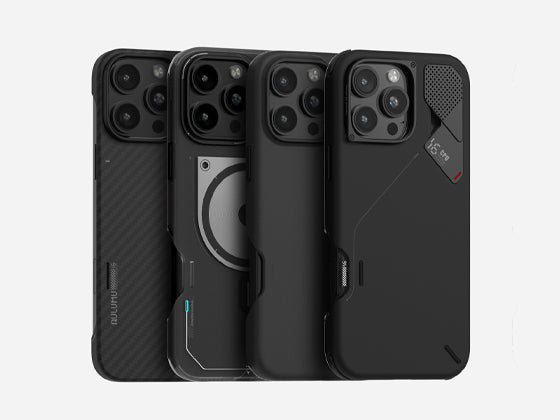
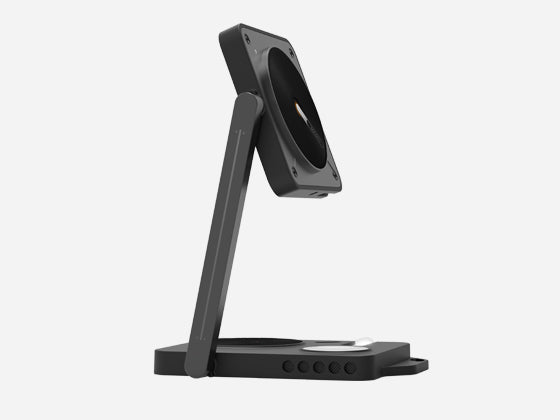
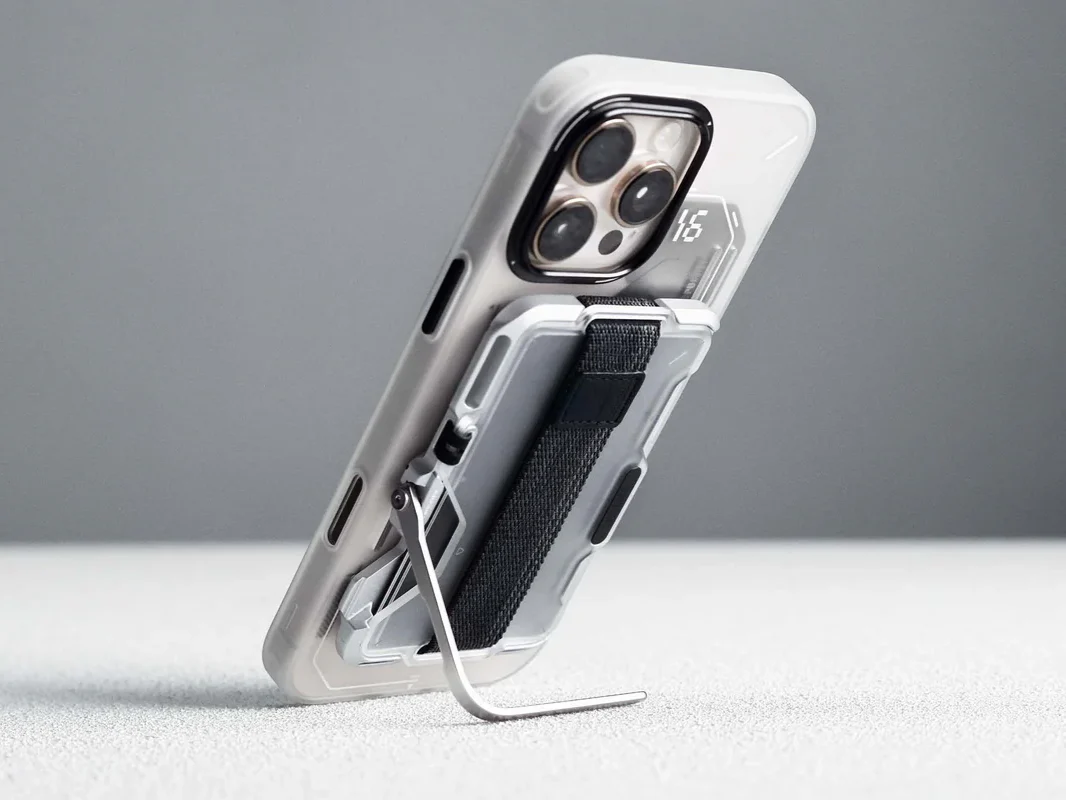
Positioning differences: Qi 's main positioning is charging, and most of its accessories are charging devices, so its product lineup is relatively limited. On the other hand, MagSafe goes beyond charging and is positioned as an ecosystem of accessories. Not only charging devices, but other devices can also be integrated into MagSafe as accessories , forming a complete ecosystem. For example:
Smartphone cases  card holder
  A smartphone stand
All of these can be integrated into MagSafe . Compared to a single charging function, MagSafe is more of an accessory platform.
User differences: If you primarily use iPhone devices, prioritize stable charging, and want to use magnetic accessories, you may want to consider a charging device with MagSage . Conversely, if you use multiple devices and prioritize device compatibility, you may want to consider a charging device with Qi , which has fewer device limitations .
Qi and MagSafe are not completely opposed. Both were developed to make charging easier. They both share the same basic principle, differing only in their implementation based on electromagnetic induction, resulting in similar charging and protection mechanisms. Qi emphasizes versatility and compatibility, while MagSafe is an ecosystem of accessories with a magnetic charging system. They are not mutually exclusive substitutes, but different solutions that address different customer needs.