

Charging protocols may seem like a difficult concept to understand, but when applied to everyday problems, such as "Why do different models charge differently even though I'm using the same charging cable?", "Why do different models charge at different speeds even though I'm using the same adapter?", and "Why is an original cable better than a second-hand cable?", charging protocols are at the heart of these questions. Simply put, charging protocols act as a translator between the adapter and the device, making communication between them more efficient and accurate.

What is the charging protocol ?
Before understanding charging protocols, it's important to understand the charging process itself. Charging is the gradual conversion of external electrical energy into chemical energy within a device by controlling voltage and current. The charging protocol plays a crucial role in this process. Without a charging protocol, problems like battery overheating and slow charging can occur. A charging protocol is a set of negotiation rules that coordinate how voltage and current are output and received between the adapter and device. Following these rules allows both the adapter and device to find the optimal charging method, reducing energy waste and ensuring safety during charging. The charging protocol itself does not generate electricity or provide voltage or current. It is simply a set of rules that enable the adapter and device to work together.
How does the billing protocol work ?
The charging protocol performs different functions at different times throughout the charging process.
At the start of charging
When you first connect the data cable, the adapter doesn't output a lot of power, only safe, low-risk outputs. This is where the charging protocol comes into play. The charging protocol receives signals from the adapter, understands the power delivery methods the adapter can provide, and allows the adapter to advertise its capabilities. It then feeds this information back to the device. The device decides which power delivery method to choose based on the current battery level, maximum allowed voltage, and current battery temperature, and communicates that choice to the adapter via the charging protocol.
Charging
After receiving feedback from the device via the charging protocol, the adapter adjusts its output, increasing voltage or current to initiate a fast charge. During the charging process, the device constantly monitors its status. If the device overheats or approaches full charge, it sends feedback via the charging protocol to the adapter, which then reduces the current or voltage appropriately. Toward the final stage of charging, the charging protocol continues to coordinate between the two devices, gradually reducing power and achieving a constant voltage state until the battery is fully charged.
Throughout the charging process, the charging protocol plays a command and coordination role to ensure the entire charging process is efficient and safe.
Billing Protocol Classification System
There are many charging protocols on the market, but they can be divided into five main categories: USB standard protocols, chip manufacturer-driven fast charging protocols, mobile phone manufacturer-specific fast charging protocols, traditional identification-based charging protocols, and wireless charging protocols. Let's use a table to easily classify them.
|
Protocol Category |
Protocol Name |
Chinese /Full name explanation |
Adjustment method |
Typical Power Range |
Main use cases |
compatibility |
|
USB standard class protocol |
USB Power Delivery 2.0 |
USB Power Delivery Protocol 2.0 |
Multiple Fixed Voltage Levels |
18W to 60W |
Mobile phones, tablets, laptops |
expensive |
|
USB Power Delivery 3.0 |
USB Power Delivery Protocol 3.0 |
Fixed Voltage + Programmable |
18W to 100W |
Mobile phones, tablets, laptops |
expensive |
|
|
USB Power Delivery 3.1 |
USB Power Delivery Protocol 3.1 |
Fixed Voltage + Programmable |
28W to 240W |
High-performance laptop and monitor |
expensive |
|
|
Chipmaker-led fast charging protocols |
programmable power supply |
Programmable Power Modes ( Part of the PD) |
Continuously adjustable voltage |
20W to 100W or more |
New generation fast charging mobile phones |
expensive |
|
Qualcomm Quick Charge 1.0 |
Qualcomm Fast Charge 1.0 |
Fixed Voltage |
≤10W |
Early Android smartphones |
middle |
|
|
Qualcomm Quick Charge 2.0 |
Qualcomm Fast Charge 2.0 |
Multiple Fixed Voltage Levels |
18W |
Android smartphone |
middle |
|
|
Qualcomm Quick Charge 3.0 |
Qualcomm Fast Charge 3.0 |
Microstep Voltage Control |
18W to 36W |
Android smartphone |
middle |
|
|
Qualcomm Quick Charge 4/4+ |
Qualcomm Fast Charge 4/4+ |
USB PD based |
27W or more |
Android smartphone |
expensive |
|
|
Mobile phone manufacturer's proprietary fast charging protocol |
Fast Charging Protocol |
Huawei's fast charging protocol |
Fixed Voltage |
18W to 22.5W |
Huawei mobile phones |
low |
|
Supercharge Protocol |
Huawei SuperCharge protocol |
High current method |
40W to 100W or more |
Huawei mobile phones |
low |
|
|
VOOC Flash Charge |
OPPO Flash Charge Protocol |
Low voltage, high current |
30W to 80W or more |
Oppo /OnePlus |
low |
|
|
Super VOOC |
OPPO SuperVOOC Flash Charge |
Low voltage, high current |
100W or more |
Oppo /OnePlus |
low |
|
|
Flash Charge |
vivo flash charging protocol |
Multiple options |
33W to 120W |
vivo mobile phone |
low |
|
|
Xiaomi fast charging |
Xiaomi fast charging |
Hybrid method |
33W to 120W or more |
Xiaomi mobile phones |
low |
|
|
Traditional Identity-Based Charging Protocols |
USB Battery Charging DCP |
USB battery charging specification (dedicated charging port) |
No negotiation |
≤12W |
Old equipment, charging head |
Very high |
|
Apple 2.4A charging |
Apple 2.4A charging recognition |
Voltage Identification |
≈12W |
Old iPhone/iPad |
middle |
|
|
Wireless Charging Protocol |
Qi Wireless Charging |
Qi wireless charging standard |
Agreement negotiations |
5W to 15W |
Mobile phone, earphones |
expensive |
|
MagSafe |
Apple's Magnetic Wireless Charging |
Agreement negotiations |
15W to 25W |
iPhone |
middle |
The key to maximizing the effectiveness of any charging protocol is the data cable.
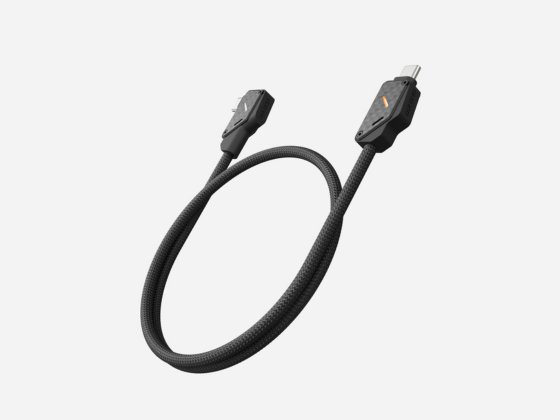
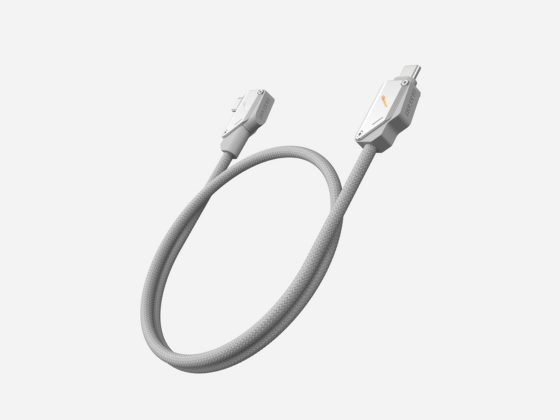
Charging cables play a crucial role in charging protocols. They are more than just cables; they directly affect whether fast charging is possible, the fast charging wattage, and the stability and safety of the entire charging process. Many fast charging protocols require a charging cable to function. A charging cable includes not only a power cord but also other conductors. If the charging cable's internal structure is substandard or the cable itself is defective, fast charging will fail. The charging cable also determines the maximum charging power. Even if the adapter and device support the charging protocol, if the charging cable's wattage is insufficient, the required power will not be achieved. To achieve high-wattage fast charging, the cable must have an E-Marker chip. The E-Marker chip ensures the safety of high-wattage fast charging and prevents cable burnout. For example, the aulumu M07 is equipped with an E-Marker chip. The M07 is a full-featured USB 3.1 Type-C to Type-C cable capable of charging, data transfer, and screen mirroring a variety of devices, including mobile phones, Bluetooth headsets, power banks, and tablets. The cable is made of nylon braided material for durability and abrasion resistance. It features an E-Marker chip, delivering up to 240 watts of charging power. It supports multiple charging protocols, including standard USB charging protocols, chip manufacturer protocols, and proprietary protocols from mobile phone manufacturers, allowing you to charge multiple devices simultaneously.

The charging protocol is an essential communication medium in the charging process. The adapter and device communicate through the charging protocol and check each other's status to ensure efficient and safe charging. The data cable is the embodiment of this medium, enabling the charging protocol to be implemented more effectively. Both are important components throughout the charging process.